2025 was a tumultuous year for the entire development community. Aid cuts, more blatant transactionalism, and geopolitical pressures all contributed to severe disruptions with all too real human consequences.
Amid so much upheaval, one source of encouragement has been the willingness of many individuals and organizations to ask what must come next and not abandon ambition. In support of the Funder Roundtable on the Future of Development, we have begun tracking those discussions and initiatives so as to listen and learn. We recognize that philanthropy should not be determining the future of development, but we can support the emergence of new ideas and help strengthen the ecosystem that will shape that future.
We have identified over fifty “future of development” related initiatives that started up in 2025 alone. We recognize there will be more that are not yet on our radar screen. Plus, there are many longer established initiatives and movements that have added relevance in today’s context. We are now in the process of refining this mapping to be an interactive public tool to which people can add new initiatives. It will be available this spring. Stay tuned!
In the meantime, we wanted to offer a few initial reflections.
These efforts are being led by a range of stakeholders including think tanks, INGOs, civil society networks, multilateral institutions and philanthropies.
Most of the initiatives best known to us are being led by organizations headquartered in the Global North.
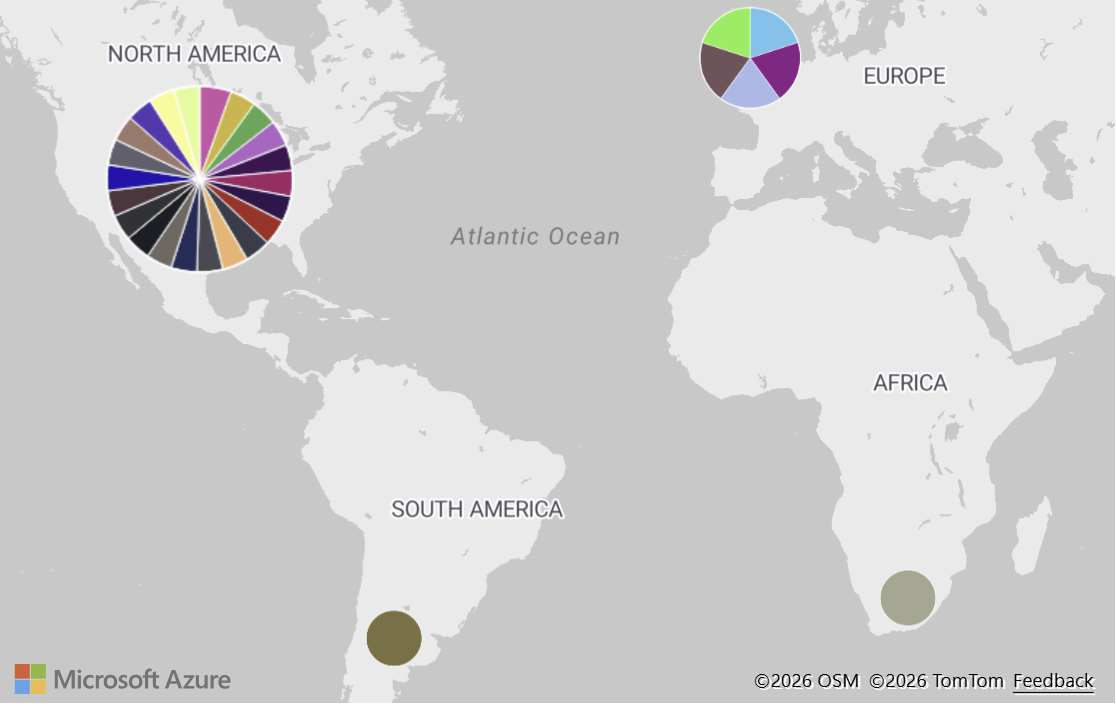
In terms of content, there is a wide variety. Themes range from efforts to restore public support in foreign assistance to bold visions of reform of multilateral institutions to efforts to unlock new capital for debt-burdened low income countries to rethinking the future roles of civil society. There are futures conversations underway for specific countries and regions and for specific segments of the development agenda, including humanitarian responses, peacebuilding, and fiscal systems.
To help make sense of this landscape, we are mapping initiatives to our Four Shifts framework.
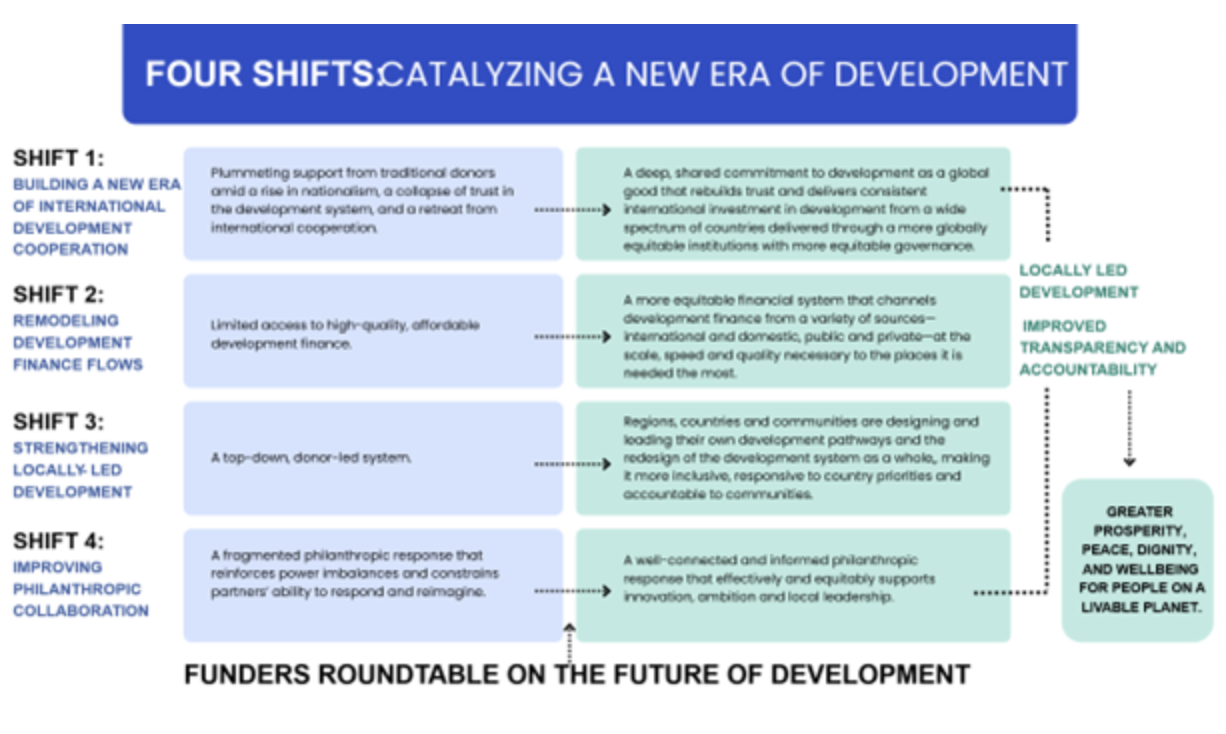 This framework is a device to help structure our collective thinking and position field and funder engagements. At a headline level, these four shifts relate to:
• Shift One: Rebuilding development cooperation (the future of ODA, multilaterals, and
international cooperation);
• Shift Two: Alternative and expanded development finance (beyond traditional aid);
• Shift Three: Locally led development (country ownership, agency, and accountability); and
• Shift Four: Philanthropy collaboration (how funders work differently together)
We find that a majority of the futures related efforts already known to us are clustered in Shift One, although important scoping work (including some led by philanthropy) is underway on Shift Two on mobilizing alternative forms of development finance.
There appears to be an underinvestment in Shift 3 on country/local led efforts. This may reflect an undercount as these initiatives would be less visible at the global level. However, given the importance of any reimagining of development being grounded in local agency, more support to conversations across different contexts is a priority.
This points to an important role for philanthropy in supporting conversations across the Four Shifts and then investing in those championing creation of a more equitable, trusted and durable development system.