Development will have many futures. Some of those futures will rattle the cages of philanthropy and challenge our default positions. While much philanthropy tends towards calls for the local, participatory, and democratic, a great deal of what passes as development is mega, vertical, exclusionary and autocratic. Take your pick of examples currently being built out: the Chancay deep water port on Peru’s Pacific Coast and its potentially huge implications for the Western Amazon; the continuing iterations of the Regional Initiative for the Infrastructural Integration of South America, IIRSA; the East Africa Crude Oil Pipeline; Indonesia’s Food Estate program; the Indonesia Weda Bay Industrial Park. Beyond the tendency to question and critique such initiatives – for very well-founded reasons – it is worth asking how far we have really let their implications seep into how many in philanthropy think of our day-to-day work: I am not sure that I have.
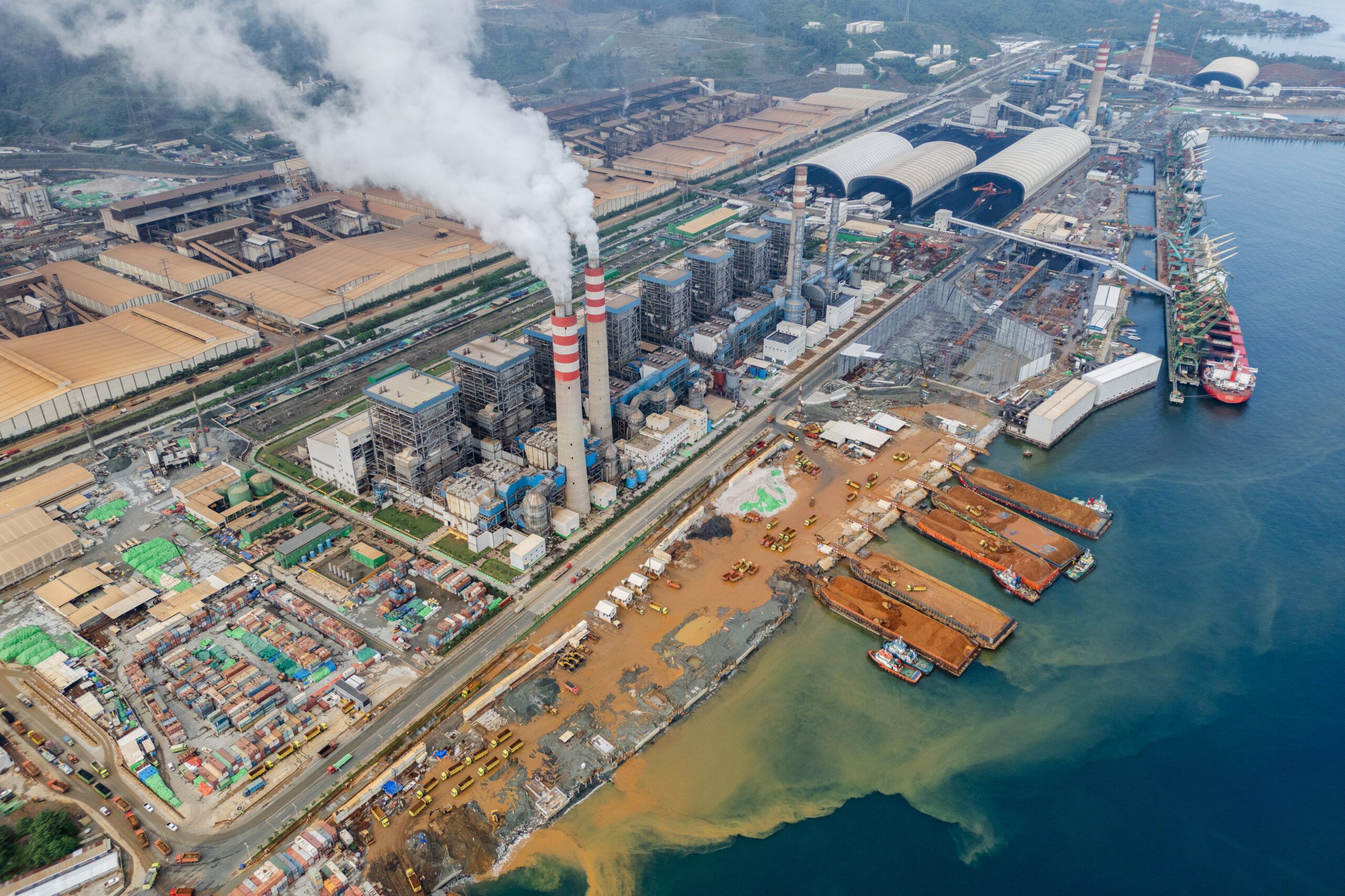
Take the Indonesia Weda Bay Industrial Park, or IWIP, in Central Halmahera, North Maluku. On a bay that, less than a decade ago, was the home of village fishing grounds, and not so very far from Indigenous Peoples in Isolation and Initial Contact-the O’Hongana Manyawa - now stands an industrial complex that hosts nickel ore smelters and processing plants, associated industries and support services, an airport, social facilities and a large coal-based power plant built to provide electricity to all these operations. IWIP has already generated some 80,000 jobs, and according to local authorities, IWIP plans to grow several fold in the coming years - the IWIP masterplan says that its total land area will reach 5.000 hectares. This industrial complex drives large-scale supply operations, and the Bay that not long ago was the territory of small-scale fishing boats now hosts at any one-time dozens of ships and ocean barges waiting to deliver coal, nickel ore, food supplies and other goods to the Park.
The nickel ore comes from a fast-expanding footprint of open-cast mines across Halmahera and other islands in the Maluku archipelago that is progressively turning green landscapes into lateritic red in the service of downstream industry - a strategic national project to industrialize nickel ore production to supply electrification projects internationally and nationally. The sky above the bay is now painted by plumes of steam and emissions, and bright night illumination. In essence, a whole industrial city has landed in a not long-ago remote corner of islands famed for their role in the global spice trade (especially of cloves and nutmeg) and for being at the center of Alfred Wallace’s independent contributions to the theory of evolution by natural selection.
Of course, landscapes have industrialized and transformed many times in the past – I proudly come from one such landscape in the UK and appreciate the social, cultural, and economic creativity of industrialization. These industrialization transformations are not just ones of “dark satanic mills” transforming “green and pleasant lands” as William Blake would have had it. However, not many landscapes like this appear in less than a decade, and historically, they were not produced through the diktats of coordinated central authorities. One can only marvel at the remarkable efficiency of those who built this landscape (in this case a coordination of the Tsingshan group and the Indonesian state) and also at the efficiency of local and migrant labor markets that bring in eighty thousand workers so quickly, and somehow manage to house and feed them through the markets, eateries, hostels, micro-apartments and other accommodation that have grown quickly in villages within a two hour commuting radius from IWIP.
The new asymmetries of power that these transformations introduce into these landscapes are similarly breathtaking. How do fisherfolk, village leaders or even more so, Indigenous People, only recently leaving isolation, negotiate transformations on such huge and rapid scales when, for many, as a now dated but still important book framed it, they are viewed as being “In the way of development.” How does one imagine democracy or participation – or an idea of the “local” - in the face of such asymmetries and inequalities?
These forms of mega-development are the ones that matter to states and capital – there is a reason that they are denominated projects of national interest, while education systems, climate financing mechanisms, and most of the sectors of interest to philanthropy are not. In contrast to the literature that distinguishes between the notion of “little ‘d ’” development, understood as the expansion of capitalism, and “‘big D’” development as intentional interventions pursuing normative goals (the stuff of grants and projects), the forms of megadevelopment like IWIP constitute both at the same time. They are simultaneously the stuff of capitalist expansion and very intentional, goal-oriented interventions. And while these types of mega, and often extractive, investments are not what many in philanthropy may mean when we say “development,” they are precisely what many others do understand as “development.” Any discussion of the future of development must recognize this, and think through how philanthropy engages with phenomena like IWIP in ways that neither constitute futile resistance (how do you resist a city?) nor end up simply making philanthropy functional to state and capital. The roots of this response will not be found in old discussions of alternatives or localizations. Philanthropy talks a lot right now about “meeting the moment”, an idea grounded in the notion that the cultural and socio-political terrain has moved irrevocably. IWIP and its many, many siblings across the globe similarly suggest that much that is understood as development has also changed irrevocably, and that these shifting grounds of development are themselves constitutive of the changing political grounds that so vex us.